MUSO SHIDEN RYU
(夢想神伝流)
-
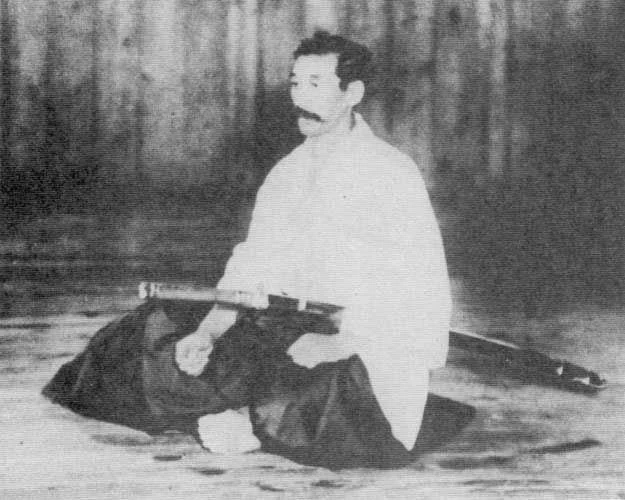
The word "Shoden", which can be translated as the "first transmission", consists of the kata of Ōmori-ryū iaijutsu plus one kata variation exclusive to Musō Shinden-ryū. The kata start from the seiza sitting posture. This series of kata became the first to be learned when the 17th headmaster of the Tanimura branch, Ōe Masamichi, reorganized and rationalized the curriculum of Hasegawa Eishin-ryū at the start of the 20th century.[1] The kata Ryūtō, which involves the Ukenagashi technique, is often considered as the most difficult kata of the Omori set. The seventh kata, Juntō was created neither for dueling nor for self-defense, but to serve as kaishakunin.
According to his own memoirs, Nakayama Hakudō invented the twelfth kata, In'yō Shintai Kaewaza, as a variation on the fifth kata In'yō Shintai.[6]
The following is the order given by Yamatsuta.[7] In some schools, the order of the last two kata are reversed.
01. Shohattō (初発刀)
02. Satō (左刀)
03. Utō (右刀)
04. Ataritō (当刀)
05. In'yō Shintai (陰陽進退)
06. Ryūtō (流刀)
07. Juntō (順刀)
08. Gyakutō (逆刀)
09. Seichūtō (勢中刀)
10. Korantō (虎乱刀)
11. In'yō Shintai Kaewaza (陰陽進退替業)
12. Battō (抜刀)
-
The word "Chūden" can be translated as the "middle-transmission" and consists of ten techniques from Hasegawa Eishin-ryū. This series of kata is executed from the tachihiza (more commonly called tatehiza) sitting position. In contrast to the first series of kata, the enemy is considered to be sitting very close and thus the primary goal of the chūden techniques is to create proper cutting distance (kirima) by stepping back instead of forward.[8]
Ōe Masamichi is credited with developing the hayanuki (quick draw) exercise. In this style of training, the practitioner executes all ten techniques in a row.[9] Two versions of hayanuki exist. In one version, both the left and right hands are used to execute the movements, just as in the normal practice. The second version involves drawing the sword with only the right hand, as if you were on a horse.[10] This kind of practice is not done in formal presentations.[11]
01. Yokogumo (横雲)
02. Toraissoku (虎一足)
03. Inazuma (稲妻)
04. Ukigumo (浮雲)
05. Yamaoroshi (山颪)
06. Iwanami (岩浪)
07. Urokogaeshi (鱗返)
08. Namigaeshi (浪返)
09. Takiotoshi (滝落)
10. Nukiuchi (抜打)
-
The word "Okuden" can be translated as the "inner transmission". Oku-iai, as it is also called, is divided into two groups: suwari-waza (sitting techniques) and tachi-waza (standing techniques). As in Chūden, the sitting techniques are performed from tatehiza.
Suwari-waza (座業)
01. Kasumi (霞) – Mist
02. Sunegakoi (脛囲) – Covering the shin
03. Shihogiri (四方切) – Cutting four corners
04. Tozume (戸詰) – Across the screen doors
05. Towaki (戸脇) – Along the screen doors
06. Tanashita (棚下) – Under the shelf
07. Ryozume (両詰) – Obstacles on both sides
08. Torabashiiri (虎走) – Running Tiger
09. *Itomagoi (暇乞) – Request Leave of Absence [Three forms]
* Despite the fact to be a sitting-form, in an Enbu the Itomagoi form is usually performed after the execution of all standing forms so the kenshi is ready to begin the finishing reiho, like Battô in Omori-ryu and Nukiuchi in Hasegawa Eishin Ryu.
Tachi-waza (立業)
01. Yukitsure (行連) – Escort
02. Rentatsu (連達) – Escort
03. Somakuri (惣捲) – Cutting the multiple opponents
04. Sodome (総留) – One-handed cuts
05. Shinobu (信夫) – Stealth
06. Yukichigai (行違) – Passing by
07. Sodesurigaeshi (袖摺返) – Flipping the sleeves
08. Moniri (門入) – Entering the gate
09. Kabezoi (壁添) – Along the walls
10. Ukenagashi (受流) – Block and deflect
11. *Oikakegiri (追掛斬) – Pursue & Cut Down
12. Ryoushihikitsure (両士引連) – Accompanied Journey
* This is believed to be a kata that Oe Masamichi Sensei discarded when he re-organized the old tradition. It is generally not performed.Description text goes here
-
The paired Kumitachi techniques (the kenjutsu part of the curriculum) are rarely taught today. Tachi Uchi-no-Kurai and Tsumeiai-no-Kurai are the series most often taught.
Tachi Uchi-no-Kurai (太刀打之位)
1. Deai (出合)
2. Tsukekomi (附込)
3. Ukenagashi (請流)
4. Ukeire (請入)
5. Tsukikage (月影)
6. Suigetsutō (水月刀)
7. Dokumyōken (独妙剣)
8. Zetsumyōken (絶妙剣)
9. Shinmyōken (心明剣)
10. Uchikomi (打込)
Tsume Iai-no-Kurai (詰居合之位)1. Hassō (発早・發早・八相)
2. Kobushidori (拳取)
3. Iwanami (岩浪)
4. Yaegaki (八重垣)
5. Urokogaeshi (鱗返)
6. Kuraiyurumi (位弛)
7. Tsubamegaeshi (燕返)
8. Gansekiotoshi (眼関落)
9. Suigetsutō (水月刀)
10. Kasumiken (霞剣)
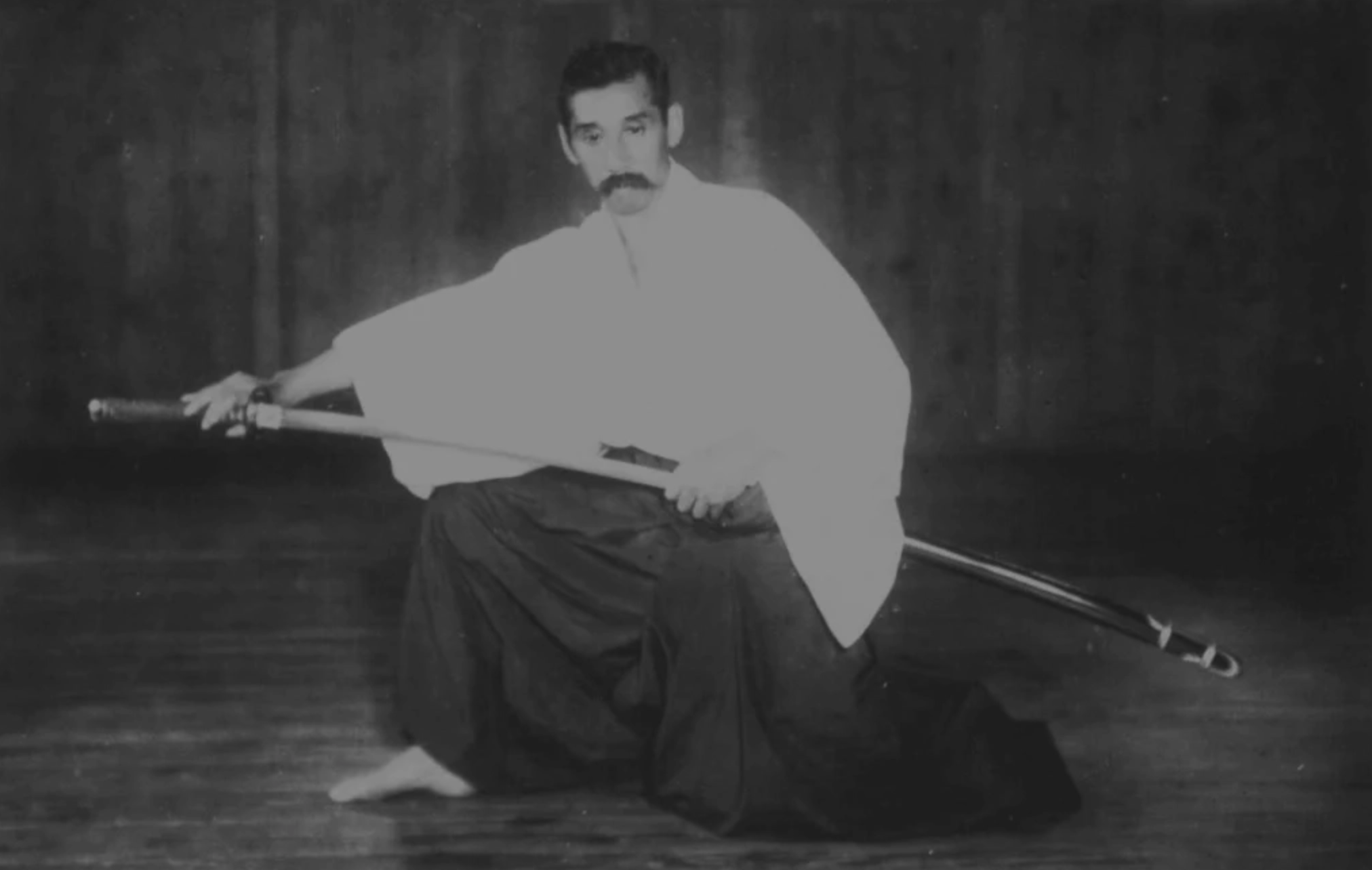
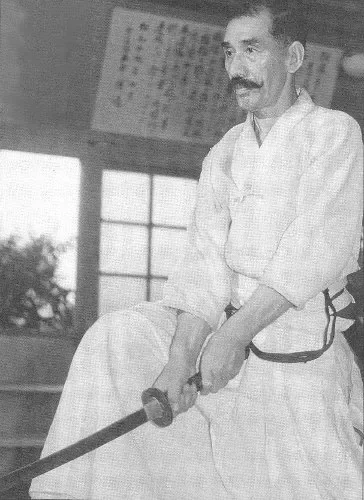
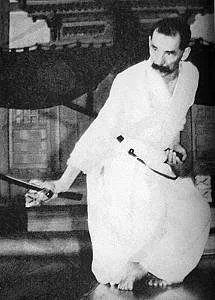
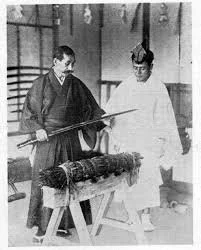
Musō Shinden-ryū (夢想神伝流) is a modern classical school of Japanese sword (iaido) drawing that traces its technical and philosophical roots to the late sixteenth century teachings of Hayashizaki Jinsuke Shigenobu, widely regarded as the originator of formalized iaijutsu. His practical methods of drawing and cutting (batto-jutsu) were transmitted and refined through successive generations, most notably by Hasegawa Eishin-ryū, who established what became known as Musō Jikiden Eishin Ryū in Tosa Province. In the early twentieth century, the eminent swordsman Nakayama Hakudō (中山博道) reorganized and renamed this tradition as Musō Shinden Ryū, shaping it into a cohesive system that preserves classical combative principles while emphasizing composure, precision, and continuity of awareness (zanshin). Today, Musō Shinden Ryū is practiced worldwide as a disciplined expression of the Japanese sword, balancing martial effectiveness with spiritual and ethical cultivation.
History and Overview
The Japanese sword, though not Japan’s earliest weapon, became its most refined. By the early eighth century, the distinctive form of the Nippon-tō had emerged, evolving alongside the social and spiritual identity of the samurai. More than a weapon, the sword came to be regarded as the soul of the bushi, embodying both martial function and moral discipline. Through its study, the swordsman sought not only victory over an opponent, but mastery over the self.
From this tradition developed two complementary disciplines: kenjutsu, the art of sword combat, and iaijutsu, the art of drawing and cutting in a single, decisive action. While thousands of sword schools arose between the medieval and late Edo periods, relatively few exerted lasting influence on the development of iai. Among the most significant was the tradition attributed to Hayashizaki Jinsuke Shigenobu.
Hayashizaki Jinsuke Shigenobu and the Origins of Iai
Hayashizaki Jinsuke Shigenobu, active in the late sixteenth century, is widely regarded as the progenitor of formalized iaijutsu. Though much of his life is obscured by legend, historical consensus credits him with systematizing practical methods of sword drawing and cutting—then known as batto-jutsu. His teachings emphasized simplicity, effectiveness, and readiness, qualities well suited to the realities of combat.
Following Hayashizaki’s death, his art was transmitted through successive generations, evolving under influential figures such as Tamiya Narimasa and, most notably, Hasegawa Eishin, the seventh-generation headmaster. Eishin refined both standing and seated techniques and formalized the style known as Musō Jikiden Eishin Ryū, which was preserved primarily in Tosa Province (modern-day Kōchi).
From Eishin Ryū to Musō Shinden Ryū
By the late Edo period, Musō Jikiden Eishin Ryū had developed into distinct transmission lines. In the early twentieth century, the renowned swordsman Nakayama Hakudō studied deeply within both major branches of Eishin Ryū. Drawing on this foundation—and influenced by classical kenjutsu traditions—he reorganized and renamed his teaching Musō Shinden Ryū in 1933.
Musō Shinden Ryū reflects Nakayama Hakudō’s vision of iai as both a classical martial discipline and a vehicle for spiritual cultivation. While rooted in combative principles, its practice emphasizes precision, dignity, and continuity of mind (zanshin), aligning the physical act of sword drawing with ethical and introspective refinement.
Today, Musō Shinden Ryū stands as one of the most widely practiced forms of iaidō, preserving a lineage that traces back to the formative period of Japanese swordsmanship while remaining a living tradition in the modern era.
Today NYBA continues this tradition in our practice with the support and direction of the FEI (European Iaido Federation) under the direction of Philip Ortiz Sensei, Malcolm ‘Tiki’ Shewan Sensei, and Charles Boleware Sensei.